

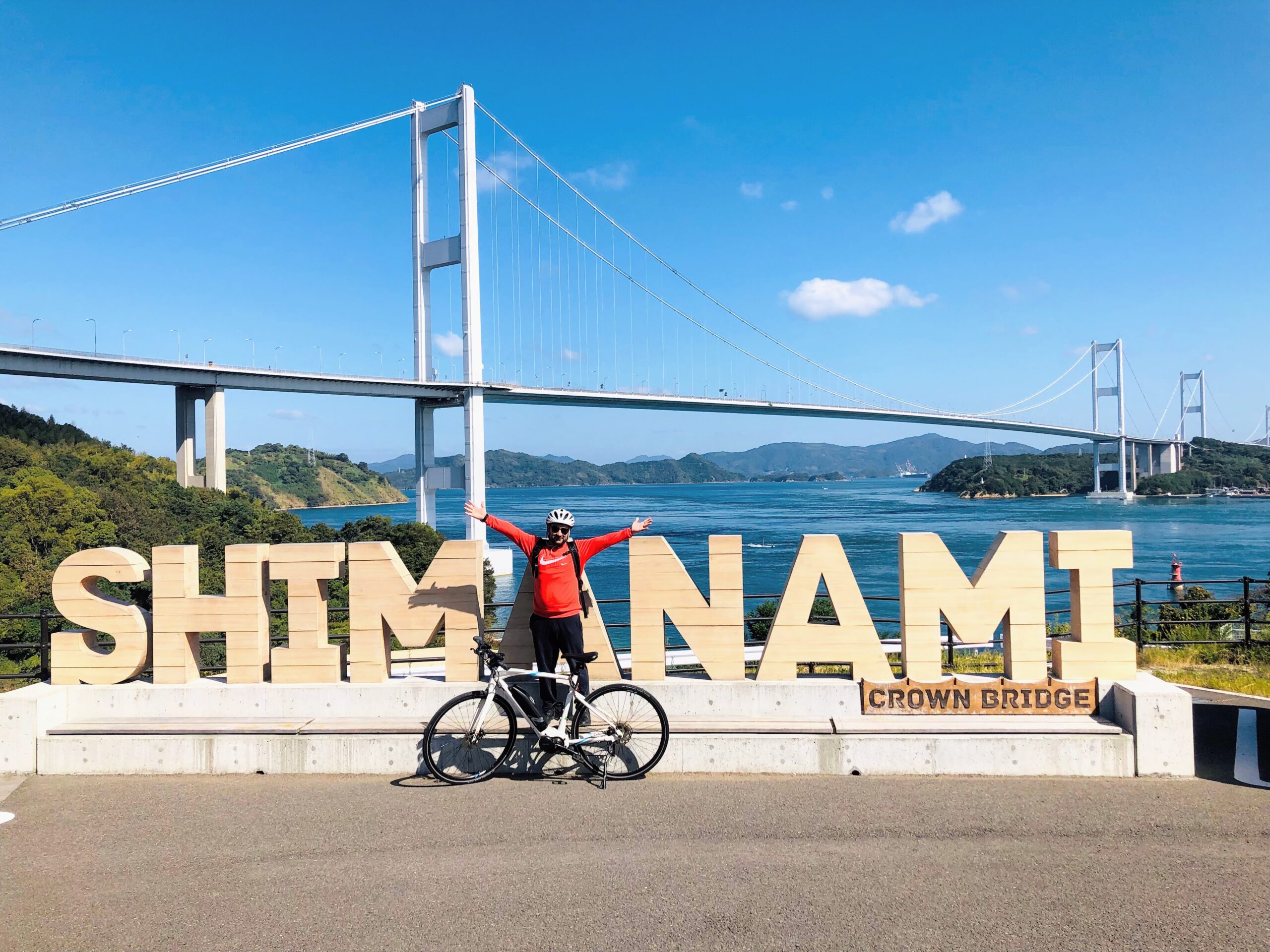
Why Shikoku? The Adventure You Never Knew You Needed
Let’s be honest — when travel agents think of Japan, Tokyo, Kyoto, and Osaka tend to steal the spotlight. And yes, those cities are extraordinary. But if you really want to offer your clients something they’ll talk about for the rest of their lives, it’s time to turn your attention to Shikoku.
Shikoku is Japan’s fourth-largest island, and it sits tucked between the Seto Inland Sea and the Pacific Ocean, connected to Honshu by three spectacular bridge systems. It’s a place where ancient cedar forests spill down mountainsides, where rice paddies glow gold in autumn, where pilgrims in white garb walk a trail that is 1,200 years old — and where a cyclist can pedal along a car-free island route with nothing but the shimmer of the sea for company.
This is adventure travel with soul. It’s not just about the physical challenge — it’s about being somewhere that feels genuinely off the beaten track, where local people are curious and welcoming, where every village has a story, and where your clients can feel like they’ve discovered something the world hasn’t caught up with yet.
“Shikoku is the Japan that Japan hasn’t exported yet. And that’s exactly what makes it so precious.” |
For travel trade professionals building itineraries that stand out, Shikoku delivers on every dimension: physical adventure, cultural depth, spiritual significance, outstanding food, and breathtaking natural scenery — all without the crowds that can overwhelm Japan’s more famous destinations.
Let’s explore what makes this island extraordinary — prefecture by prefecture, trail by trail, and island by island.
Saddle Up: Shikoku’s Cycling Adventures
The Shimanami Kaido — A Cycling Heaven on Earth
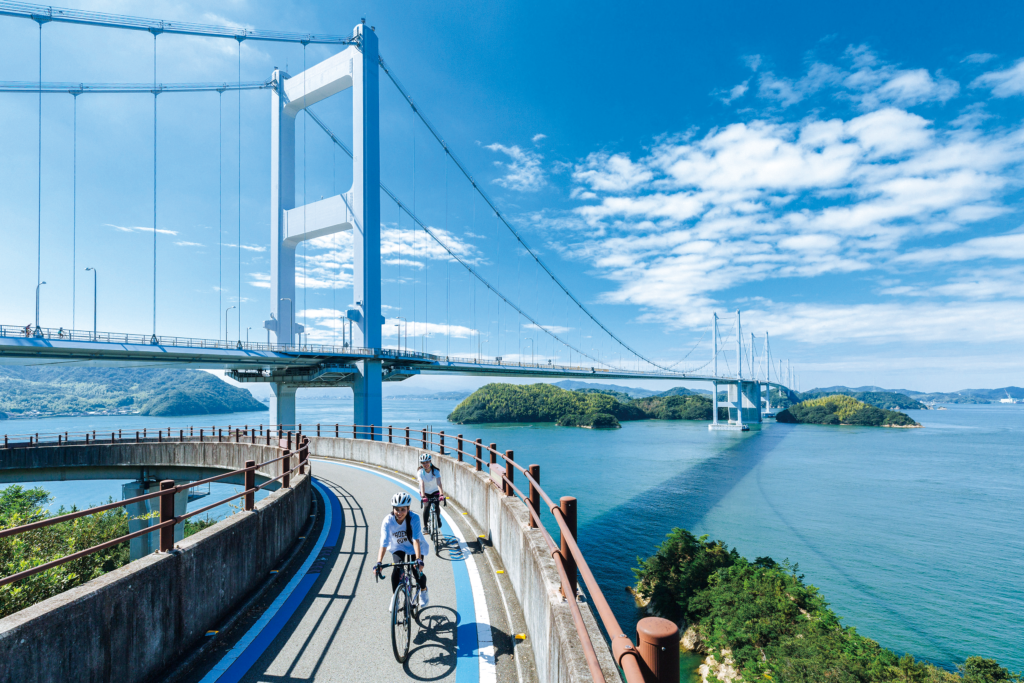
If you only recommend one cycling experience in all of Asia, make it the Shimanami Kaido. This legendary 70-kilometer cycling route connects Onomichi on Honshu to Imabari in Ehime Prefecture, hopping across six islands of the Seto Inland Sea via a series of graceful suspension bridges. It is, without question, one of the finest cycling routes on the planet.
What makes it special? For starters, the scenery is simply jaw-dropping.
The Seto Inland Sea is studded with over 700 small islands, many of them forested and largely uninhabited. Cycling across the bridges, you feel as though you’re floating above a watercolour painting. On clear days, the views stretch for miles in every direction.
The route itself is genuinely inclusive — dedicated cycling lanes mean that riders of all fitness levels can enjoy it. Casual riders typically take two days, staying overnight on one of the islands, while more experienced cyclists can push through in a single day. Rental bikes are available at both ends, making logistics simple for tour operators.
Operator Tip: Imabari Cycling Ehime’s Imabari City calls itself the ‘Cycling City of Japan’ and has excellent bike rental infrastructure, guided tour options, and cycling-friendly accommodation networks. It makes an ideal hub for multi-day Seto Inland Sea cycling programmes. |
Cycling Through the Four Prefectures:
Beyond the Shimanami Kaido, Shikoku offers a wide variety of cycling terrain for different client profiles.
Kochi Prefecture is tailor-made for adventure cyclists. The rugged Pacific coastline offers dramatic sea cliffs, hidden coves, and long stretches of open road with little to no traffic. The Cape Muroto and Cape Ashizuri peninsulas are particular highlights — wild, windswept, and utterly cinematic.
Tokushima Prefecture offers river valley cycling along the Yoshino River — one of Japan’s most famous white-water rafting and kayaking rivers — and it also has beautiful cycling paths along its banks. Riding through the Iya Valley, past thatched-roof farmhouses and cedar gorges, feels like stepping back in time.
Kagawa Prefecture offers gentler terrain and is perfect for groups that want scenic coastal cycling without serious elevation. The Seto Inland Sea shore around Takamatsu and the islands of Naoshima, Teshima, and Shodoshima are increasingly popular with art-loving cyclists who want to combine riding with world-class contemporary art.
Best Cycling Season: March–May (spring cherry blossoms) and September–November (autumn foliage). Summer is manageable on the coast but hot inland. |
Hit the Trail: Pilgrimage Hiking in Shikoku.
The Shikoku Pilgrimage — The World’s Greatest Walk?
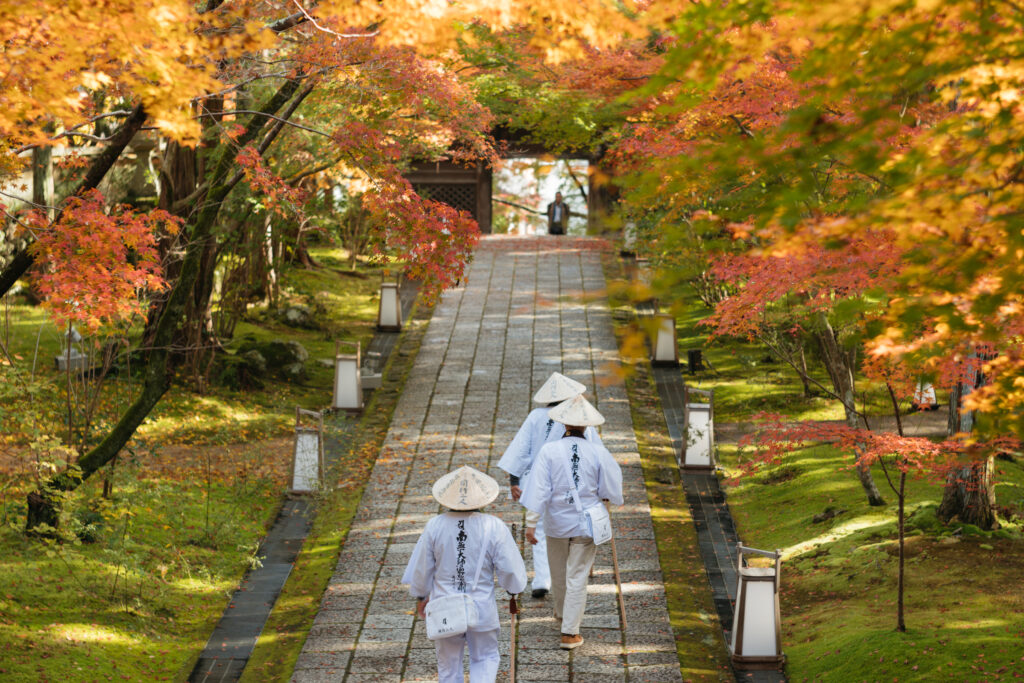
The Shikoku 88 Temple Pilgrimage is one of the world’s great long-distance walks. At 1,200 kilometres, it circumnavigates the entire island, visiting 88 Buddhist temples associated with the monk Kobo Daishi (Kukai), who founded the Shingon sect of Buddhism in the 9th century. Every year, tens of thousands of pilgrims — called ‘ohenro-san’ — walk, cycle, or drive the route in search of spiritual connection, personal transformation, or simply adventure.
For your clients, the full circuit takes roughly 40 to 60 days on foot and is a genuine once-in-a-lifetime undertaking for those willing to commit to the trail. But don’t let that put people off: the pilgrimage is wonderfully modular. Many travelers complete it in segments over multiple trips, and there are countless operators who offer supported multi-day sections combining walking, traditional temple lodgings (shukubo), and cultural experiences along the way.
For Travel Trade Professionals The pilgrimage is remarkably flexible as a product. Offer clients 5-day ‘Pilgrimage Highlights’ that cover the most dramatic sections — the temple-dense opening stretch around Tokushima, the wild Cape Muroto section in Kochi, or the mountain temples of Ehime — combined with ryokan stays and cultural immersion. |
What makes the pilgrimage experience unique is the concept of ‘osettai’ — the tradition of residents offering gifts, food, and encouragement to pilgrims. It’s a living cultural practice that makes walkers feel genuinely welcomed by the communities they pass through. Your clients won’t just be observers; they’ll be participants in an ancient living culture that persists to this day.
Mountain Hiking Beyond the Pilgrimage
Shikoku’s mountain terrain is spectacular and surprisingly underused by international visitors, which means your clients can hike in genuine wilderness without the queues found on Mount Fuji or the Kumano Kodo.
Mount Tsurugi (1,955m) in Tokushima is the second-highest peak in western Japan and one of the 100 Famous Japanese Mountains. The hiking trails through beech and conifer forest are beautiful in every season, and the summit offers panoramic views across the entire island.
The Shikoku Karst on the Ehime-Kochi border is one of Japan’s most unusual landscapes — a high plateau dotted with white limestone outcrops, grazing cattle, and wildflower meadows at an elevation of 1,400 meters. The contrast with the subtropical coast just below is remarkable.
The Iya Valley in Tokushima is often called ‘Japan’s Tibet’ — a remote, mist-wrapped gorge accessible only by narrow mountain roads. The vine bridges (kazura-bashi) are an iconic feature of this landscape, and the hiking trails through the gorge are absolutely stunning.
Cape Ashizuri in Kochi Prefecture is the southernmost point of Shikoku and a dramatic coastal hiking destination. The clifftop trails above the Pacific are exhilarating, and the area has strong associations with the pilgrimage — Temple 38, Kongofukuji, sits right on the cape.
Trail Grades for Operators: Mount Tsurugi and Shikoku Karst suit intermediate to advanced hikers. The Iya Valley and coastal pilgrimage sections are appropriate for moderate fitness levels with good footwear. |
Pilgri
Soft Adventures: Shikoku’s Cultural Reaches.
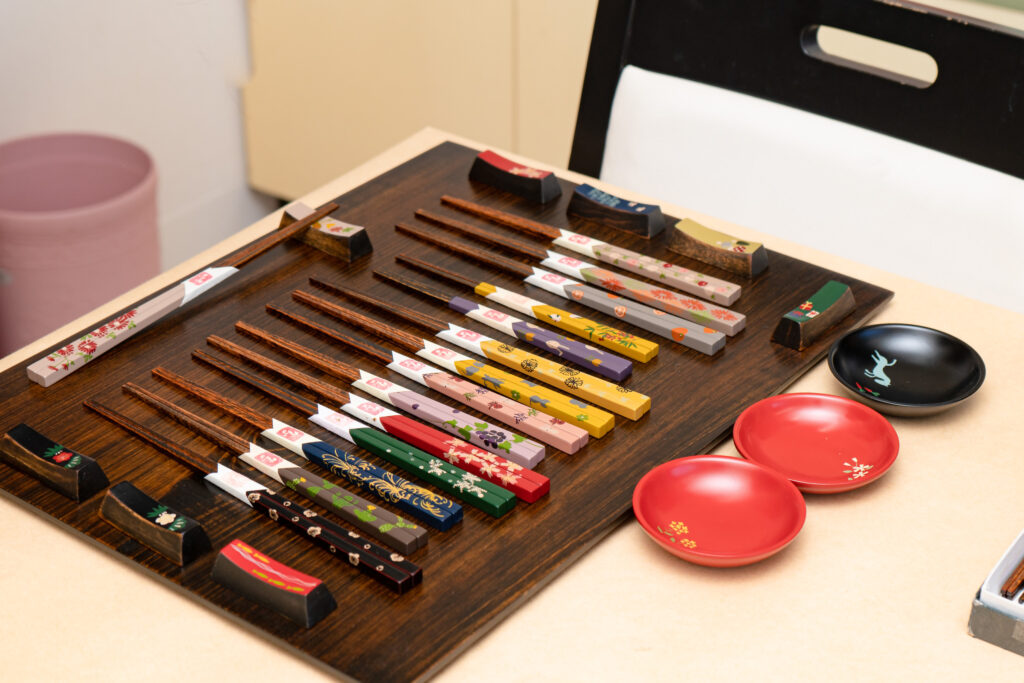
Adventure doesn’t always mean weary muscles and muddy boots. Shikoku has a magnificent menu of what is known as ‘soft adventure’ — immersive cultural experiences that are active, engaging, and memorable without requiring athletic training. These are the experiences that round out a multi-activity itinerary and give clients the cultural context that makes physical adventure all the more worthwhile.
Tokushima — Awa Odori and the Iya Valley
Tokushima is home to the Awa Odori Festival, one of the largest traditional dance festivals in Japan. Held every August, it draws over a million visitors who come to watch — and join — the ecstatic street dancing that fills the city for four nights. The dance is said to be over 400 years old, and the atmosphere is electric. For groups visiting outside August, many venues offer year-round Awa Odori performances with audience participation — a brilliant evening activity for tour groups.
Beyond the festival, the Iya Valley offers remarkable cultural immersion. Clients can stay in beautifully restored traditional farmhouses (kayabuki-yane), participate in indigo dyeing workshops — Tokushima has been Japan’s center of indigo production for centuries — and cross the famous vine-woven suspension bridges that once protected this remote valley from invaders.
Kochi — Samurai History and Whale Watching
Kochi is the largest prefecture in Shikoku and one of the most characterful. Its people are famously proud, direct, and hospitable — attributed locally to the legacy of the great Meiji Restoration hero Sakamoto Ryoma, who was born here and is revered as a national hero.
Kochi Castle is one of the few original castles in Japan (not a modern reconstruction), and the town below it hosts the Hirome Market — a wonderfully chaotic indoor food hall where locals gather to eat, drink, and socialize. It’s an authentic local experience that tour groups absolutely love.
For soft adventure, Kochi’s coastline offers some of Japan’s best whale and dolphin watching. The warm Kuroshio Current brings humpback whales, sperm whales, and several dolphin species close to shore, particularly between spring and autumn. This is a genuinely thrilling half-day activity that requires zero physical exertion but delivers maximum excitement.
Ehime — Matsuyama Castle and Dogo Onsen
Ehime’s capital Matsuyama is one of the most refined cities in Shikoku — a place of castle views, literary heritage (Natsume Soseki set his novel ‘Botchan’ here), and the oldest hot spring in Japan. Dogo Onsen is a gorgeous 19th-century bathhouse often said to have inspired Hayao Miyazaki’s Spirited Away, and soaking in its ancient waters after a day’s cycling or hiking is a highlight of this region.
Matsuyama Castle, perched on a wooded hilltop in the middle of the city, is one of twelve original castles remaining in Japan. The views over the city and the Seto Inland Sea are outstanding, and the castle’s samurai history is beautifully presented. For groups, a guided visit combining the castle, Dogo Onsen, and a traditional kaiseki dinner makes a perfect day.
Kagawa — Udon, Art Islands, and Zen Gardens
Kagawa is Shikoku’s smallest prefecture but arguably its most sophisticated. It’s the birthplace of sanuki udon — the thick, chewy noodles that have become one of Japan’s most beloved foods — and an ‘udon tour’ visiting local noodle makers is one of the most popular cultural activities on the island. It’s hands-on, delicious, and genuinely fun for all ages.
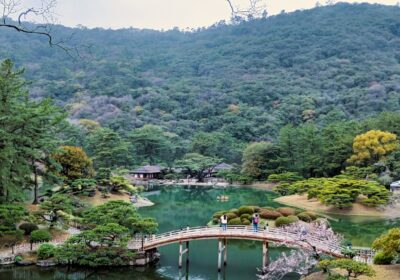
Kagawa is also home to Ritsurin Garden, widely regarded as one of the finest examples of traditional gardening in Japan. Its composition of sculpted pine trees, lotus ponds, and teahouses against the backdrop of Mount Shiun is masterful landscape design at its most refined. For clients who appreciate Japanese aesthetics, this is a must-visit.
Naoshima Island, just off the Kagawa coast, has become a global destination for contemporary art lovers. The Benesse Art Site transformed what was a quiet fishing island into an open-air museum featuring works by James Turrell, Yayoi Kusama, and Walter De Maria embedded into the landscape. A day trip from Takamatsu combining Naoshima’s art with cycling and a seafood lunch is a wonderfully balanced soft adventure.
Island Hopping: Shikoku’s Extraordinary Offshore Treasures.
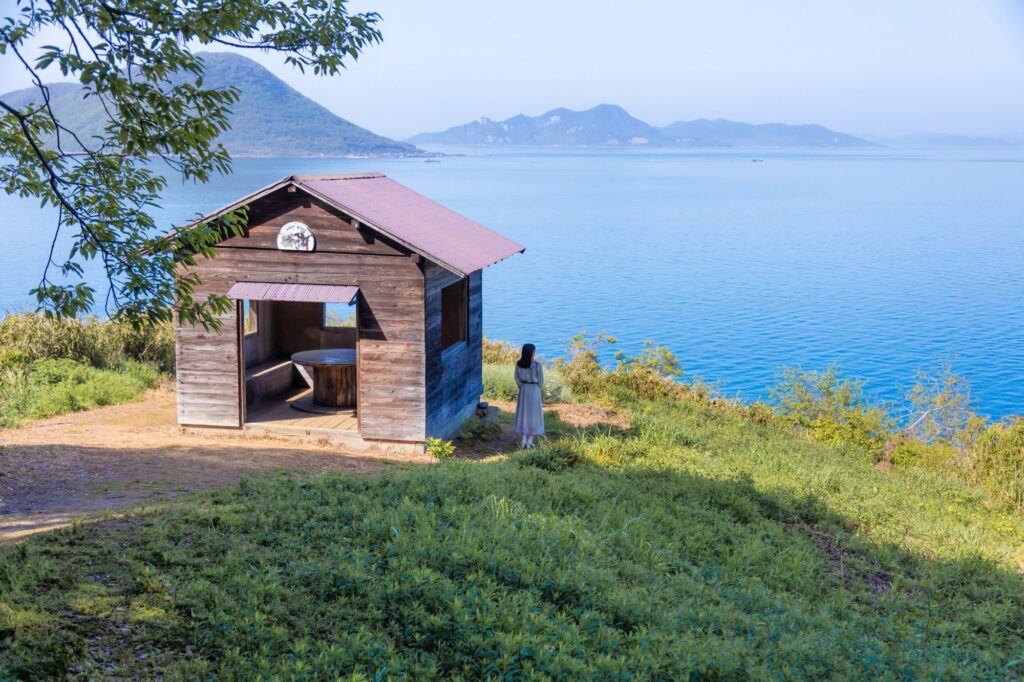
Shikoku’s island story doesn’t begin or end on the main island. Scattered across the Seto Inland Sea and accessible by ferry from Takamatsu, Imabari, and other ports, these islands offer some of the most memorable experiences in all of Japan. For tour operators building island-hopping itineraries, this region is a goldmine.
Naoshima — The Art Island
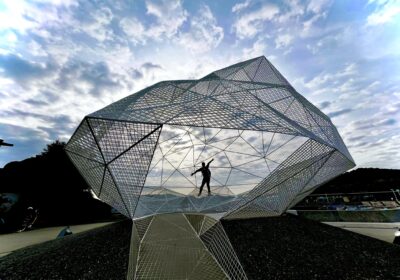
We’ve mentioned Naoshima briefly, but it deserves its own space. This small island of around 3,000 people has been the subject of an extraordinary 30-year art project by the Benesse Corporation and architect Tadao Ando. The result is a series of underground and clifftop museums, outdoor sculptures, and converted fishing houses (the Art House Project) that make the island feel like a living artwork in itself.
Cycling is the perfect way to explore Naoshima — the island is compact, the roads are gentle, and discovering a Yayoi Kusama pumpkin sculpture around a quiet harbor corner is the kind of delightful surprise that makes travel in this region so special. Combine Naoshima with neighbouring Teshima and Inujima for a multi-island art and culture day that is unique to this part of Japan.
Shodoshima — Olives, Soy Sauce, and Terraced Rice Fields
Shodoshima is one of the Seto Inland Sea’s larger islands, famous for being Japan’s primary olive-growing region — a legacy of the island’s mild, almost Mediterranean climate. Cycling through olive groves above a turquoise sea is an unexpectedly European experience in the heart of Japan, and the island’s olive oil products, olive-based cosmetics, and olive-infused cuisine make for outstanding souvenir shopping.
But Shodoshima is far more than olives. The area around Tonosho and Yasuda produces some of Japan’s finest soy saucesome of Japan’s finest soy sauce, and brewery tours are a fantastic cultural activity. The terraced rice fields of Nakayama are among the most photographed landscapes in western Japan — particularly beautiful at dawn in autumn when mist rolls through the terraces. The island also has its own 88-temple mini-pilgrimage, ideal for clients who want the spiritual experience in a more manageable format.
Teshima — Community, Art, and Organic Farming
Teshima is a quieter, more intimate island experience than Naoshima. Once threatened by an industrial waste scandal that galvanised its community, Teshima has reinvented itself as a model of sustainable island living combined with world-class art. The Teshima Art Museum — a concrete shell building that breathes with the wind and has water droplets forming naturally from the floor — is one of the most extraordinary architectural experiences in Japan.
The island’s organic farms and fishing community are central to its identity, and food-focused tours combining a visit to the art museum with a farm lunch and a walk through the terraced hillsides make for an exceptionally meaningful day.
Omishima — Cycling and Ancient Shrines
Located along the Shimanami Kaido route, Omishima is home to Oyamazumi Shrine, one of the oldest and most important Shinto shrines in Japan. The shrine’s treasure house contains an extraordinary collection of samurai armour — reportedly housing around 80 percent of Japan’s National Treasure armour. Cycling to the shrine along the Shimanami Kaido and spending time in its ancient cedar grove is a deeply atmospheric experience that perfectly combines physical activity with cultural depth.
Planning Your Shikoku Adventure: Practical Information for Travel Professionals.
Getting There
Shikoku is connected to Honshu by three bridge systems and is well-served by domestic flights. The main gateways are:
Takamatsu (Kagawa) — Closest to Naoshima and the Seto Inland Sea islands, 1 hour from Osaka by JR Limited Express
Matsuyama (Ehime) — Direct flights from Tokyo (Haneda), Osaka, Nagoya, and other major cities
Kochi — Direct flights from Tokyo and Osaka; a scenic 2.5-hour train from Okayama
Tokushima — Easy access from Osaka (under 2 hours by bus or train via the Akashi-Kaikyo Bridge)
Best Time to Visit
Spring (March–May): Cherry blossoms, mild temperatures, ideal for cycling and hiking
Early Autumn (September–November): Spectacular foliage, comfortable temperatures, excellent visibility for island views
Winter (December–February): Quiet, cold in the mountains but mild on the coasts; excellent for cultural visits without crowds
Summer (June–August): Hot and humid inland; the Awa Odori Festival in August is unmissable
Accommodation Options
Shikoku has excellent accommodation across all categories — from international standard city hotels in Matsuyama and Takamatsu to exquisite rural ryokan, cycling-friendly guesthouses, and temple lodgings (shukubo) on the pilgrimage route. For adventurous groups, many farmhouses in the Iya Valley and Shodoshima have been converted into beautiful boutique stays that provide an authentic local experience.
Tour Design Tips
A 7-night itinerary combining Takamatsu / Naoshima art with Matsuyama / Dogo Onsen / Shimanami Kaido cycling works beautifully for mixed groups
A 10-night active itinerary can combine Shimanami Kaido cycling, Iya Valley hiking, Kochi coastal cycling, and Cape Ashizuri pilgrimage walking
Island-hopping itineraries based on Takamatsu, covering Naoshima, Teshima, and Shodoshima, work well as 4-5 night add-ons to a broader Japan programme
The pilgrimage is ideal as a 5-7 day standalone product focusing on Tokushima’s opening temples and cultural highlights
Shikoku’s tourism infrastructure is growing rapidly, with increasing English-language support, cycling-friendly accommodation networks, and excellent local guide availability — making it a genuinely workable destination for international groups. |
Ready to Put Shikoku on Your Clients’ Map?
Shikoku is one of those rare destinations that genuinely over-delivers. Clients come expecting a quiet corner of Japan and leave having experienced some of the most meaningful travel of their lives — the physical challenge of a mountain trail, the meditative rhythm of a pilgrimage walk, the joy of cycling above a glittering inland sea, the warmth of a community that still practices ancient traditions of generosity to strangers.
As travel professionals, you have the opportunity to put this extraordinary island in front of clients who are looking for something deeper, more adventurous, and more authentic than the well-worn Japan highlights circuit. Shikoku is ready for them — and they will thank you for it.
Start Planning Whether you’re building a standalone Shikoku programme or weaving it into a broader Japan itinerary, Shikoku’s combination of cycling, hiking, pilgrimage, art islands, and cultural experiences gives you endless creative options. Reach out to us to start building itineraries that your clients will never forget. |
Japan has many layers — and Shikoku is one of its most beautiful. The adventure is waiting. All you have to do is open the door — and step onto the road.
~ Shikoku Adventure ~
Keywords: Shikoku adventure travel | Japan cycling tours | Shikoku hiking | Shimanami Kaido | Shikoku 88 Temple Pilgrimage | Awa Odori | Naoshima art island | Shodoshima | Japan soft adventure | Ehime Matsuyama | Kochi travel | Tokushima Iya Valley | Kagawa udon tour
Great content! Keep up the good work!